
Antibody-Drug
Conjugate Solutions
Antibody-drug conjugates (ADCs) offer a versatile, precise and efficacious option for drug development and patient care across a range of diseases—particularly cancer treatment. Our end-to-end preclinical testing services cover the entire spectrum of ADCs, from discovery through IND and NDA, allowing developers to advance novel therapies further, faster.
Antibody-Drug Conjugate Services by WuXi AppTec Lab Testing Division
IND-Enabling Packages
In Vitro Studies
In Vivo Studies
Why Antibody-Drug Conjugates Need Specialized Development Support
Antibody-drug conjugates are highly complex and targeted—but their success depends on solving critical development challenges. At WuXi AppTec, our experienced teams and global network of ADC labs help you overcome these challenges with seamless, efficient testing solutions.
- Complex three-component structure requiring specialized analytical methods
- Linker stability and controlled payload release optimization
- Risk of off-target toxicity from premature payload release
- Immunogenicity from antibody and payload components
- Species-specific antigen expression affecting translatability
- Evolving regulatory guidelines requiring adaptive strategies
Overcoming ADC Development Challenges
Unlike traditional therapeutics, ADCs deliver potent cytotoxic drugs directly to target cells while sparing healthy tissue. This targeted approach creates unique development challenges that, if unaddressed, can lead to costly delays. A tailored, stage-specific approach is critical—spanning in vitro stability and binding studies, in vivo pharmacokinetics, advanced bioanalysis, and specialized safety assessments. WuXi AppTec’s integrated global platform delivers support at every stage of preclinical development, helping you accelerate and de-risk your ADC program.
Stage: In Vitro
|
ADC-Specific Challenge
|
WuXi AppTec’s solution
|
Stage: In Vivo
|
ADC-Specific Challenge
|
WuXi AppTec’s solution
|
Stage: Bioanalysis
|
ADC-Specific Challenge
|
WuXi AppTec’s solution
|
Stage: Early Toxicology
|
ADC-Specific Challenge
|
WuXi AppTec’s solution
|
Stage: GLP Toxicology
|
ADC-Specific Challenge
|
WuXi AppTec’s solution
|
Stage: IND Submission
|
ADC-Specific Challenge
|
WuXi AppTec’s solution
|
Comprehensive Preclinical
Testing for ADCs
The precision-targeted delivery of potent cytotoxic payloads makes ADCs uniquely challenging to develop and evaluate. With specialized capabilities in safety assessment, DMPK/ADME, bioanalysis, pharmacology, and CMC, WuXi AppTec can support every aspect of ADC development—all conveniently under one roof.
DMPK
Access a global network of testing facilities for ADC DMPK research, focusing on linker stability, payload release kinetics, tissue distribution, and specialized pharmacokinetic studies that address three-component therapeutic complexity.
Bioanalysis
We develop and validate sophisticated analytical methods tailored to the multi-component nature of ADCs, with high specificity and sensitivity optimized for total antibody, intact ADC, DAR analysis, and free/conjugated payload quantification across diverse conjugate formats.
Toxicology
Our ADC-tailored safety assessment services include target-mediated toxicity, payload-specific effects, immunogenicity evaluation, tissue cross-reactivity studies, and comprehensive safety profiling designed for cytotoxic conjugates.
New Insights for New Modalities
WEBINAR
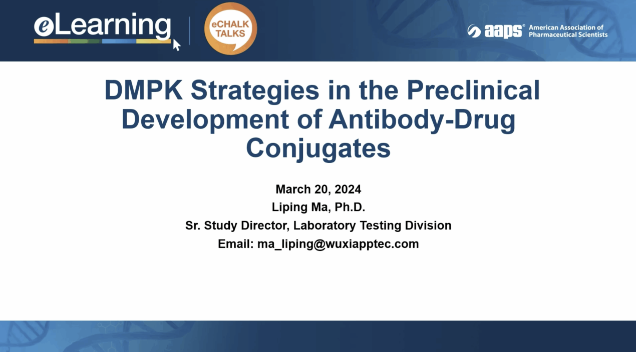
DPMK Strategies in the Preclinical Development of Antibody-Drug Conjugates
BROCHURE

Preclinical Drug Development Testing for Peptide
BLOG

Clinical Bioanalysis Strategy for Antibody Drug Conjugates (ADCs)
BLOG

What It Takes to Optimize Analytical Strategies for ADC Development
Frequently Asked Questions
What are Antibody-Drug Conjugates (ADCs)?
Antibody-Drug Conjugates (ADCs) are advanced therapies consisting of three key components: antibodies, linkers, and cytotoxic drugs. These specialized medicines use antibodies to target specific cells, like those in cancer or other diseases, delivering potent drugs directly to them. This targeted approach minimizes harm to healthy cells, making treatments more effective with fewer side effects.
Why is preclinical testing important for ADCs?
Preclinical testing serves as a crucial step in the development of ADCs, providing insights into their safety, efficacy, and how they behave in the body before moving to human trials. By uncovering potential toxicities and refining the ADC’s design, preclinical studies ensure that the therapy is both effective and safe for patients, ultimately guiding decision-making for clinical development.
What are the unique challenges in preclinical testing of ADCs compared to other biologics?
In addition to the complexities of their structure, preclinical testing of ADCs presents unique challenges compared to other biologics. Since the efficacy of ADCs hinges on the precise release and concentration of the cytotoxic payload in target tissues while minimizing toxicity in non-target tissues, testing must carefully assess these dynamics. This involves investigating the stability of the linker, mechanisms for drug release, and potential off-target effects to ensure both safety and effectiveness.
What types of preclinical studies are essential for ADCs?
Essential IND-enabling ADC studies address several specific challenges inherent in their development. ADC pharmacokinetics/pharmacodynamics (PK/PD) studies are crucial to understanding how they behave in the body, including the stability of the linker, the release mechanism of the cytotoxic payload, and its concentration in target versus non-target tissues. Toxicology assessments focus on identifying potential off-target effects and determining the safe dosage range. Efficacy studies in relevant animal models are needed to demonstrate the therapeutic potential of the ADC in a biological context. Immunogenicity evaluations are critical to assess the risk of immune responses that could reduce efficacy or cause adverse reactions. Stability tests ensure the ADC maintains its integrity and effectiveness throughout its shelf life and during administration. These preclinical studies collectively ensure that ADCs are both safe and effective before advancing to clinical trials.
How is the efficacy of ADCs evaluated in preclinical studies?
Efficacy of ADCs is evaluated in preclinical studies through a combination of in vitro assays and in vivo animal models. In vitro assays assess the ADC’s ability to bind specifically to target cancer cells, internalize, and effectively release the cytotoxic payload, resulting in cell death. In vivo studies use animal models bearing human tumor xenografts to measure the ADC’s ability to inhibit tumor growth or induce tumor regression. Specific challenges during these evaluations include ensuring the ADC’s selective targeting to minimize off-target effects, optimizing the release mechanism of the cytotoxic drug to ensure it is potent within the tumor microenvironment, and assessing the impact of the heterogeneous expression of target antigens across different tumor types. Additionally, it is critical to monitor the ADC’s pharmacokinetics and biodistribution to confirm that it achieves the desired concentration in the tumor tissue while limiting exposure to healthy tissues.
What safety assessments are critical in the preclinical testing of ADCs?
Critical safety assessments for ADCs include evaluating toxicity on normal tissues, immunogenicity of the antibody, and the safety of the released cytotoxic drug. Comprehensive toxicology studies in multiple animal species and pharmacokinetics studies are essential. Challenges include species-specific antigen expression differences, the complexity of ADC components, and predicting human immune responses.
How are the pharmacokinetics and pharmacodynamics of ADCs studied in preclinical settings?
Preclinical pharmacokinetics (PK) and pharmacodynamics (PD) studies of ADCs involve measuring their distribution, metabolism, and elimination, as well as the kinetics of drug release. These studies help determine the appropriate dosing regimen and predict the ADC’s behavior in humans. Specific challenges include the complexity of the ADC’s structure, which requires understanding the interplay between the antibody, linker, and cytotoxic payload. Additionally, accurately predicting how the ADC will distribute and release the drug in target tissues versus non-target tissues can be difficult. Ensuring the stability of the linker and the precise timing of drug release are also critical challenges in these studies.
What are the key components of an ADC that need to be tested preclinically?
Key components include the antibody (specificity and binding affinity), the linker (stability and release mechanism), and the cytotoxic drug (potency and safety). Each component must be tested individually and as part of the complete ADC.
How do you assess the stability and potency of ADCs in preclinical testing?
In preclinical testing, assessing the stability and potency of ADCs employs diverse methods. Stability assessments entail monitoring the structural integrity of the ADC, encompassing the antibody, linker, and cytotoxic payload, across various storage conditions and time frames. Potency evaluations typically involve measuring the ADC’s capacity to bind to target cells, undergo internalization, and trigger cytotoxic effects. Maintaining a delicate balance between stability and potency is imperative, as alterations in the ADC’s structure or function may compromise its therapeutic efficacy. Hence, rigorous testing methodologies and optimization strategies are essential to mitigate these challenges and ensure the stability and potency of ADCs during preclinical evaluation.
What role do animal models play in the preclinical testing of ADCs?
Animal models serve a critical role in preclinical testing of ADCs by providing valuable insights into their efficacy, safety, and pharmacokinetics. These models help researchers understand how ADCs interact with biological systems, including their distribution, metabolism, and potential toxicities. Additionally, animal models allow for the evaluation of the ADC’s ability to target specific tissues or cells of interest and assess its overall therapeutic potential. By simulating physiological conditions in vivo, animal models aid in optimizing ADC design and dosing strategies, ultimately informing decisions for clinical development.
How is the immunogenicity of ADCs evaluated during preclinical studies?
Immunogenicity assessment in preclinical studies involves evaluating the immune response elicited by the antibody component of the ADC in animal models. This evaluation encompasses monitoring the formation of antibodies against the ADC and potential allergic reactions. Challenges in assessing ADC immunogenicity during preclinical testing include the possibility of species-specific variations in immune responses and the intricate structure of ADCs, which can impact their immunogenicity.
What regulatory guidelines must be followed for preclinical testing of ADCs?
Regulatory guidelines from agencies such as the FDA, EMA, and ICH outline the requirements for preclinical testing. These include GLP-compliant toxicology studies, comprehensive PK/PD assessments, and detailed safety evaluations.
What are the common toxicological studies performed on ADCs?
Common toxicological studies include acute and chronic toxicity, genotoxicity, reproductive toxicity, and carcinogenicity studies. These assessments help identify potential adverse effects and establish safe starting doses for clinical trials.
How do linker stability and drug release profiles affect ADC preclinical testing outcomes?
ADC linker stability testing and drug release profiles are critical for determining ADC efficacy and safety. Stable linkers ensure that the drug is delivered specifically to cancer cells. In contrast, appropriate release profiles ensure the drug is released effectively to kill the cancer cells without causing systemic toxicity. These factors are rigorously tested to optimize ADC performance.
Let’s Talk About Your ADC Program
Have questions? Need specific assays? Talk to an expert today about your ADC needs.