One of the defining challenges in oligonucleotide therapeutics has not been ensuring their ability to modulate genes, but rather how to deliver their effects precisely where they are needed. Following the success of GalNAc conjugates in liver targeting, the field has long sought a next-generation strategy to unlock extrahepatic delivery.
Antibody-oligonucleotide conjugates (AOCs) have emerged in response, combining the targeting versatility of antibody-based moieties—ranging from full-length monoclonal antibodies to smaller formats such as Fab fragments and VHH domains—with the gene-regulating capabilities of oligonucleotide payloads. By linking these technologies into a single therapeutic construct, developers are pioneering a new frontier for tissue-specific delivery beyond the liver. As more AOC candidates advance through preclinical and clinical development, specialized DMPK and bioanalytical strategies are critical for understanding their pharmacology, translational performance, and safety profiles.
1. What are antibody oligonucleotide conjugates (AOCs) and how do they work?
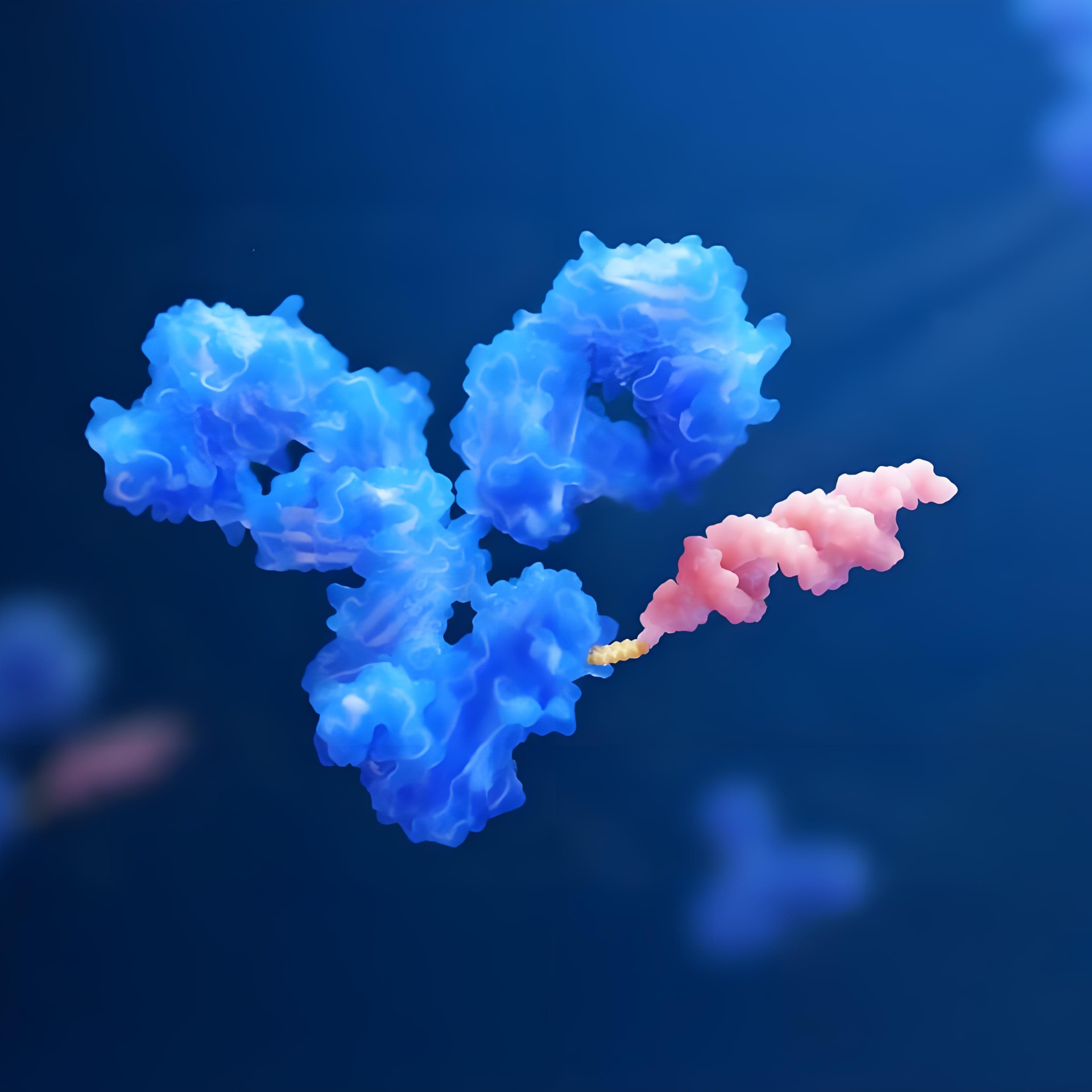
Antibody-oligonucleotide conjugates (AOCs) are hybrid therapeutics designed to combine the selective targeting capabilities of antibodies with the gene-modulating activity of oligonucleotide payloads. Structurally, an AOC typically comprises three components: an antibody-based moiety, an oligonucleotide payload, and a chemical linker that connects the two.
The antibody component recognizes and binds specific cell-surface targets, enabling tissue-specific delivery to target cells. The oligonucleotide payload may include small interfering RNA (siRNA), antisense oligonucleotides (ASOs), phosphorodiamidate morpholino oligomer (PMO), or other nucleic acid-based molecules capable of regulating gene expression. The linker, which may be cleavable or non-cleavable, plays a critical role in maintaining stability during circulation while enabling payload release after cellular uptake.
Once bound to a target receptor, the AOC is internalized through receptor-mediated endocytosis and trafficked intracellularly. It must then escape from the endosome into the cytosol, where the oligo payload can exert its therapeutic effect. Depending on the payload type, this may involve RNA interference pathways or direct modulation of messenger RNA (mRNA) processing, translation, or degradation via RNase H recruitment.
By integrating biologic targeting with nucleic acid therapeutics, this targeted drug delivery approach represents a growing class of precision medicines with applications across multiple disease areas.
2. What makes AOCs different from ADCs and oligonucleotide therapeutics?
AOCs differ fundamentally from both antibody-drug conjugates (ADCs) and conventional oligonucleotide therapeutics in three key aspects: payload mechanism, targeting capability, and intracellular delivery challenges.
Unlike ADCs, which carry cytotoxic small molecules that directly kill tumor cells, AOCs deliver gene-modulating oligonucleotides that regulate gene expression, offering a more precise and potentially safer therapeutic mechanism with broader applications. Compared to conventional oligonucleotides, which passively accumulate primarily in the liver and face severe limitations in extrahepatic tissue delivery, antibody-mediated targeting enables AOCs to potentially deliver payloads to tissues such as skeletal muscle, tumors, the central nervous system, and cardiovascular tissue.
Yet the advantages of AOCs come with unique challenges. First, oligonucleotide payloads are large, highly charged molecules that cannot cross membranes passively. Therefore, AOCs must overcome the significant hurdle of endosomal escape to release payloads into the cytoplasm—a challenge far greater than for ADCs, whose small molecule payloads may diffuse from endosomes or lysosomes after linker cleavage. Second, the linker design must simultaneously protect the integrity of the AOC during circulation, enable efficient payload release upon target engagement, and facilitate endosomal escape of the oligonucleotide. Third, the relatively poor stability and extensive metabolism of oligonucleotide payloads render the metabolic behavior of AOCs distinctly more complex than that of ADCs. Finally, the pharmacokinetics and bioanalysis of AOCs introduce additional complexity compared to conventional oligonucleotides, necessitating a carefully integrated assessment approach for multiple components.
3. Why are antibody oligonucleotide conjugates important as a major emerging therapeutic modality?
AOCs are gaining momentum because they address one of the longstanding limitations of oligonucleotide therapeutics: efficient and selective delivery beyond the liver. By leveraging antibodies as targeted delivery vehicles, AOCs may enable more precise delivery to target cells while improving systemic pharmacokinetics and reducing off-target exposure.
This capability has generated significant interest across therapeutic areas where targeted gene modulation could provide clinical benefit, including neuromuscular diseases, oncology, cardiovascular disorders, and central nervous system conditions. The ability to combine the specificity of oligos with the extended circulation half-life of antibodies also creates opportunities for improved therapeutic durability and efficacy.
In addition, recent advances in site-specific conjugation chemistry, linker design, and oligonucleotide engineering have further accelerated development. In parallel, multiple AOC candidates have entered clinical evaluation, signaling growing industry confidence in the modality. Regulatory momentum and increasing investment in oligonucleotide-based therapies have also contributed to expanding interest.
As the field matures, AOCs are increasingly viewed as a platform technology capable of broadening the therapeutic reach of gene-modulating medicines while enabling more target-specific delivery strategies.
4. What are the key challenges for AOC development?
The DMPK and bioanalytical evaluation of AOCs is challenging because these therapeutics combine the complexities of biologics and oligonucleotide drugs within a single construct. Although ADCs also possess a multi-component structure, the oligonucleotide payload introduces a distinct source of complexity due to its metabolic liability, poor intrinsic stability, and diverse catabolite generation—features not seen with conventional small-molecule payloads. As a result, AOCs give rise to a broader and more heterogeneous array of analytes that must be independently characterized throughout development.
One major challenge lies in biotransformation. Key challenges include evaluating linker stability, monitoring payload release, characterizing biotransformation at both the protein and oligonucleotide levels, and understanding the deconjugation pathways that lead to changes in oligonucleotide-to-antibody ratio (OAR) over time.
This complex biotransformation landscape, in turn, significantly increases bioanalytical complexity. Developers may need to quantify intact AOC (or conjugated payload), total antibody, total and free oligonucleotide, payload metabolites, and biomarkers across multiple biological matrices. No single analytical platform can comprehensively address all these requirements.
Another major challenge is achieving meaningful in vitro–in vivo correlation (IVIVC) with proper in vitro evaluation systems. This is particularly difficult given the critical roles of intracellular trafficking and endosomal escape in payload activity. As a result, it can be challenging to predict how early-stage results will translate to later development outcomes.
Collectively, these factors require integrated DMPK and bioanalytical strategies specifically tailored for AOC therapeutics.
5. How do linker stability and payload metabolism impact efficacy?
Linker stability and payload metabolism are key determinants of AOC efficacy because they influence whether the oligonucleotide payload reaches its intracellular target in an active form. An unstable linker may cause premature payload release during circulation, increasing off-target exposure and reducing delivery efficiency, while an overly stable linker may limit intracellular payload release, reduce endosomal escape, and ultimately hamper therapeutic activity.
Payload metabolism adds another layer of complexity, as oligonucleotides are susceptible to enzymatic degradation that can potentially reduce their effectiveness. Linker integrity and oligonucleotide metabolism can also affect pharmacokinetics and tissue distribution by altering levels of intact AOC, released payload, and downstream metabolites over time.
To address these challenges, a recommended early-stage strategy is to first evaluate the in vitro stability and metabolic liability of the naked oligonucleotide before conjugation, thereby helping to mitigate development risks. Once the intrinsic profile of the payload is established, developers can then systematically assess the stability of the intact AOC, including linker integrity and payload release. During lead optimization, combining plasma or serum stability studies with metabolite identification (MetID) assessments yields critical insights into linker behavior and payload metabolism. A thorough understanding of these parameters is essential for establishing reliable structure–activity relationships and improving the likelihood of translational success.
6. Which bioanalytical platforms are most important for AOC characterization?
AOC characterization typically requires an integrated bioanalytical strategy involving multiple complementary platforms, as no single method can adequately characterize all analytes associated with these complex therapeutics.
- Ligand-binding assays (LBAs) are the gold standard for total antibody quantification and are commonly used for quantifying intact conjugates, offering high sensitivity and throughput. LBAs are also well-established for biomarker and anti-drug antibody (ADA) detection. However, their detection specificity is limited when it comes to differentiating intact oligonucleotide payloads from partially degraded metabolites—a challenge that LC-MS/MS is better positioned to address.
- Liquid chromatography–mass spectrometry (LC-MS/MS) offers the key advantage of high specificity, enabling differentiation between parent oligonucleotides and their metabolites. Moreover, when appropriate reference standards are available, LC-MS/MS can also be used for the simultaneous quantification of these metabolites. Nevertheless, its detection sensitivity can be a limitation. In addition, LC-MS approaches can also indirectly assess the oligonucleotide-to-antibody ratio (OAR).
- Quantitative PCR (qPCR)-based methods provide the highest detection sensitivity, making them particularly valuable for detecting total oligonucleotide in tissue samples with extended collection times. However, similar to LBAs, qPCR-based methods also face specificity limitations in distinguishing intact payloads from partially degraded metabolites, as primer or probe regions may remain present in truncated sequences. Furthermore, qPCR is also suited for indirectly assessing linker stability.
Because AOCs generate multiple analytes with distinct physicochemical properties, developers increasingly rely on integrated, fit-for-purpose bioanalytical workflows capable of supporting both biologics and oligonucleotide characterization requirements simultaneously.
7. What does the future of AOC therapeutics look like?
The future of AOC therapeutics appears promising as advances in oligonucleotide engineering, antibody targeting, and conjugation chemistry continue to mature. Interest in the modality is being driven by its potential to enable targeted gene modulation across tissues that have historically been difficult to access with conventional oligo therapies.
As more clinical candidates progress through development, AOCs may expand therapeutic opportunities across neuromuscular disorders, oncology, cardiovascular disease, and central nervous system indications. At the same time, continued advances in DMPK, bioanalytical, and translational strategies will remain critical for supporting clinical development and broader adoption of these complex therapeutics.
The Bottom Line
Antibody-oligonucleotide conjugates represent another major evolution in the field of oligonucleotide-targeted therapeutics, following GalNAc conjugates-combining the delivery precision of antibodies with the gene-regulating capabilities of oligonucleotide payloads. As the modality continues to advance, AOCs are expanding the potential reach of oligonucleotide-targeted therapies beyond traditional liver-focused applications and into a broader range of tissues and disease areas.
At the same time, their structural complexity introduces significant development challenges. Integrated DMPK and analytical strategies will be the differentiator that supports translational success. With continued advances in conjugation chemistry, bioanalysis, and translational science, AOCs are poised to play a transformational role in precision medicine and next-generation drug development.